 January 2026
The Agony of De Feet: Forgotten but Unforgiving
For the past 30 years, the emphasis on muscle strengthening for health, longevity, and quality of life has become a regular part of wellness coaching. While resistance training (RT) has been elevated to near-equal status as cardiovascular training, most of the focus has been on larger, more-evident muscles, the ones you can see or support major joints or, when they fail, the ones that contribute to or prevent pain. And yet, for all their conspicuousness, the feet rarely get restorative or rehabilitative attention other than pedicures and whatnot. Some of that stems from a long-held but since reconsidered view that the many muscle of the feet can’t be trained. When there’s a problem, orthotics – static devices to realign the foot – were the go-to for foot problems. We may now know better.
An Australian review article looked at the impact of aging on the foot muscles and whether or not RT for them is “achievable, desirable, and feasible”. Many of the main foot muscles get weaker – toe flexion forces are 29% weaker during a reaching task; big toe and lesser toes are 32% and 27% weaker, respectively, in the >40 group compared to the <40’s; and strength is associated with “decreased muscle thickness and cross-sectional area”. Women had weaker feet, largely based on body size but also due to “sociocultural influences”.
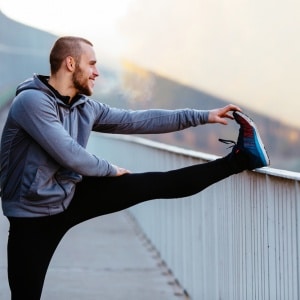
Several studies have demonstrated the effectiveness of RT for the feet, especially the toe flexors. Participants in 12-wk programs of supervised and home-based routines gained 36% strength in their toes.
Still unknown is do stronger feet prevent falls? As of now, “it is unclear whether a lower rate of falls can be expected from strengthening foot muscles in isolation”. In other words, overall RT yields overall benefits when feet are included.
ESSR Oct. 2025
AI Is Coming to Your Orthopod’s Office
You know that aching knee that seems to be getting worse but doesn’t yet require surgery? And your orthopedist won’t or can’t tell you when you’ll need it? Well, someday a computer program can. A Chinese study developed an artificial intelligence (AI)-assisted model that looks at clinical, radiological (MRI), and biomechanical information to predict whether knee osteoarthritis (KOA) will soon worsen. They had data on 594 patients and 1753 patients free of KOA to develop a “predictive model” using AI. By analyzing the biochemical test results, clinical data, and MRI results of the healthy knees, they hoped they could predict whose knees would “experience worsening pain alone, worsening pain alongside joint space narrowing in the knee (an indicator of structural worsening), joint space narrowing alone, or no worsening at all.”

In addition to objective estimates of knee OA, they had 7 physicians who used the model to assist their own predictions of future OA. They found that doing so improved the accuracy of their 2-year predictions from 46.9% to 65.4% – that’s 39% improvement in their predictive capabilities.
The value of this type of AI application is that doctors could, as the model is refined and validated in additional groups of patients, better guide their achey-kneed patients with more precise exercise prescriptions relative to their functional capabilities now and in the near future; and tailor the progression of exercises to patients’ goals and needs as they approach the day of liberation, the day they get a total knee replacement.
PLOS Medicine, Aug. 2025 in LER Oct. 2025
Tid Bits
A recent study used MRI to try to determine what factors might contribute to dorsal (top) midfoot pain where obvious sources are not evident. In general, “features of osteoarthritis [such as bony cysts and narrowing of joint spaces] and soft-tissue abnormalities were found, clustered in the medial and intermediate cuneiform [small bones of the foot] joints.” While more related to age they are not associated with pain or disability measures. J Foot Ankle Research, Mar. 2025
Subacromial shoulder pain syndrome is when the soft tissue of the shoulder gets compressed by the bony shelf (acromion) causing pain in overhead and reaching movements and a dull ache at rest. A study compared physical therapy only (PT), PT + sham dry needling (PT+SDN) and PT + dry needling (PT+DN) on a variety of shoulder health scores. At 1-year post-treatment, PT+DN vs PT as well as PT+DN vs PT+SDN showed no differences. However, the PT+DN group was less likely to require further care for their shoulders at one year. JOSPT Nov. 2025
If you ever see older people talking to themselves while resistance training (RT), it could something other than dementia of ear buds. A group out of Genoa, Italy explored the value of self-talk (ST) while lifting weights on muscle strength and functional performance in older adults. Other studies have demonstrated merit in young adult trainees but none had investigated its value in older ones. Two groups did the same 4-wk protocol with the ST group muttering positive thoughts like “I got this” or other mundanities. Both groups increased strength and overall function. The 30 sec chair sit and timed get up and go saw more improvement in the ST group than the silent lifters. So, talking to yourself in the gym pays off, especially if you’re more mature. JSCR July 2025