 February 2026
The Collagen Peptide Pep Talk
Collagen, technically, collagen peptide supplements (CPS), are all the rage despite firm scientific rationales. While collagen is made up of amino acids, much as any proteins we eat and use, various studies have shown it to be inferior to those we consume, in foods or supplements. As this newsletter reported, in November 2021, December 2023, April 2025, and July 2025, no studies in the health and fitness journals read by this author have found taking collagen worth your time and money. At an American College of Sports Medicine Annual Meeting in May, 2025, Dr. Luc van Loon, a Dutch researcher of protein needs in healthy and unhealthy adults, especially older adults, basically declared CPS is a waste of money.
Now some Japanese researchers have approached the topic from a different direction with very positive results. They had 25 healthy, young males consume 10 grams of CPS daily for 16 weeks while another 25 consumed a placebo. Each subject had a MRI of their 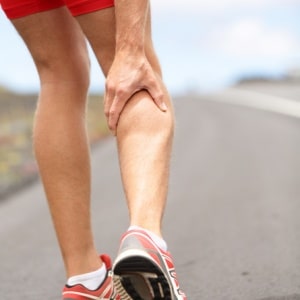 medial gastrocnemius (the larger of the superficial calf muscles) and Achilles tendon, along with a shear wave elastograph of muscle stiffness. Their calf muscles were also strength tested pre- and post-16 weeks.
While stiffness sounds like an undesirable feature, when it comes to explosive muscle actions, it’s a benefit. And CPS increased calf and tendon stiffness along with rate of torque development. The placebo group did not experience any of the changes of the study group. Also, cross-sectional thickness of the Achilles tendon and isometric torque were unchanged in both groups.
In conclusion, CPS “may serve as an effective nutritional intervention for modifying muscle mechanical properties” that may be useful in power activities, from walking fast to jumping.
MSSE Dec. 2025
The Calf Muscle Conundrum: Why Older Runners Miss Them
Muscle stiffness, ordinarily an undesirable thing, is actually beneficial if you’re a competitive runner: stiff lower limb muscles act like tight springs which help you push off faster and more efficiently. See above. Studies have shown, as previous REAL News letters – see here, here, here – had covered, that older runners – and older walkers, too – do not use their calf muscles (plantar flexors) as much as young runners despite years of training. Theories abound, so a group of Chinese researchers tested the relationship between muscle (co-) activation time and leg stiffness, vertical stiffness (resistance to the center of mass falling too much upon foot strike), and joint stiffness (hip, knee, or ankle).
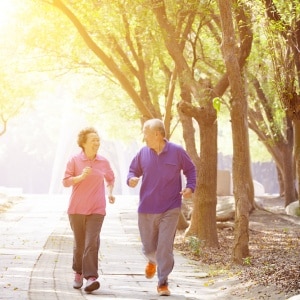
A study of 29 young, male recreational runners used EMG and complex biomechanical measures to assess leg muscle functions during two runs: at 10 and 12 km/hr. They found that the soleus and lateral gastrocnemius (two of the main calf muscles) had higher activations during the initial contact and mid-stance phases, respectively, which were positively correlated with leg stiffness at higher speeds. The soleus (which is behind the gastroc but is apparently more important than most athletes ever knew about) is extremely involved in the push-off phase whereas the large quadriceps muscle is negatively correlated with ankle joint stiffness.
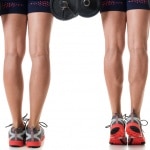
They concluded that “higher ankle plantar flexor activation contributes to greater lower extremity stiffness regulation during stance, particularly during higher speeds.” Which suggests that high-rep, especially one-leg, heel raises are the key to a more youthful gait!
MSSE Nov. 2025
Tid Bits
The gluteal muscles – the big one in back and the 2 lateral ones – are critical for so many functions of life and sport. Weaknesses and dysfunctions are associated with increased injury risk, especially for female athletes. A study comparing strength measures of all three during drop-jump landing (DJL) and cutting movements (CM) found decreased strength affects DJL more than CM, suggesting stronger glutes should be targets of training for all. JCSR Jan. 2026
Nerve conduction velocity (NCV) diminishes as we age. While our reflexes might be intact and of normal response rates, we will experience degeneration of motor neuron responses that lead to appropriate movements such as those that might prevent a fall. Testing the benefits of a resistance training (RT) program on NCV and comparing RT’s effects on a younger vs older population would allow researchers to know if RT could enhance NCV. By performing 3/wk of grip strengthening for 4 wks, they found that RT is a “viable method to counteract age-related nerve deterioration”. MSSE Oct. 2026
Why is it many young women have a harder time losing weight, even though they exercise and eat well? Ovarian hormones always get the blame. It’s possible that these hormones alter the appetite-regulating hormone responses to exercise. So a well-designed study had young women do 30 minutes of moderate intensity cardio the day before, of, and after the follicular (F), luteal (L) and ovulatory (O) phases of their cycles. Appetite hormones – ghrelin, GLP-1, et. – and hunger perceptions were measured pre-, 0, 30, 60 and 120 minutes after the cardio. They found that there were “no divergent appetite responses” after the cardio workouts across all three hormonal phases in “eumenorrheic females not using oral contraceptives”. Next theory? MSSE Jan. 2026