Fall 2026
On Protein, At Last
The new/old buzzword in nutrition, especially in fitness and exercise contexts, is protein. No longer confined to the meat and dairy industries, or snuck in under the cover of, OMG, vegetables as in beans and nuts, protein is seeing its third or fourth resurgence here in America and, eventually, everywhere else. So much so that you now can buy protein water, protein chips, and protein candy, not just protein powder, bars, and drinks.
At least in my lifetime, protein achieved outsized popularity from the moment Dr. Robert Atkins and then Dr. Irwin Maxwell Stillman pitched their models of high protein, high fat, low carbohydrate diets in the mid- to late-1960s. Then, due to fears and concerns that such diets might contribute to heart disease, back when the medical community thought eating high cholesterol foods caused high cholesterol in your blood and heart, these diets lost favor. High carb diets achieved ascendancy in the 1970s when the running fad took over. Like, who didn’t watch the Olympics back then and not learn that our marathoners ate lots of carbs? Thus, by association, eating lots of carbs and less protein and fat, meant you’d always be as thin as all those runners you’d see at marathons or on your neighborhood streets.

The food industry stuffed us with high carb foods masked in trans-fat goop which were not saturated fats, like meat and eggs had, and somehow all those non-runners were getting fatter.
During the 1970s and into the 1990s, as we were getting fatter and sicker despite eating less protein, they were not giving up their protein; they were adding carbs onto those calories. At that time, the going recommendations for protein intake from the American Dietetics Association and all public health officials suggested we eat 0.8 grams/kg of body weight, or 0.36 grams/lb. And, in light of how many calories most of us ate, it wasn’t hard to get more than enough per pound.
But exercise science was following the lead of those who did resistance (or strength) training (RT) for sport or fitness or appearance. New numbers were coming in suggesting that athletes, of all types, needed as much as 1.0 – 2.0 g/kg, whether they were trying to be football players or gymnasts. Why? Because intensive training breaks down muscle tissue that then has to be rebuilt and protein is the brick and mortar of muscle.
All this took another iteration as the population aged, as those early exercise scientists themselves got older and recognized that they were losing lean muscle mass (LMM) despite (because of?) all their cardio training and low-intensity weight strength training.
A new word was created to describe this process of age-related muscle loss in 1989 by Dr. Irwin Rosenberg: sarcopenia. Essentially this means the loss of LMM that starts to happen in your 30s and accelerates in your 60s even if you exercise them properly.
Put simply, even those who train throughout their entire lives get weaker, slower, less powerful….though still stronger, faster, and more powerful than their age-peers who are sedentary.
And more protein science, which originated from medical science, bubbled up to the surface in the face of an aging, Baby Boomer generation. It was found that hospitalized patients receiving total parenteral nutrition via IV recovered better if given higher amounts of protein to minimize disuse muscle loss, or atrophy. Furthermore, studies showed that older people thrived better when they ate not simply enough calories but more protein than the ADA recommendation.

In fact, the new recommendation for older adults is comparable to that of young athletes: 1.2 – 1.6 g/kg and up to 2.0 g/kg for those who are physically active.
This finding met the complementary finding that older people – over 60, generally – do not synthesize protein nearly as well as young people. That means, given the same dosage of protein, say a 30 gram drink, young people will absorb almost all 30 grams while older ones might only synthesize some fraction of it. This is called anabolic resistance. So not only do older people lose LMM, not only do older people tend to eat less than they did when they were younger, not only do they need more protein as they age, they can’t even use the protein they consume nearly as well as youngsters!
What’s a senior to do?
Well, there’s good news, especially for a fitness trainer who own a fitness facility.
Dr. Luc van Loon’s (2024) team has found that an older person who does physical exercise actually synthesizes protein as well as a young person. His studies have demonstrated that a bout of resistance training confers a 24-hour window during which the protein one consumes is synthesized and utilized with the same efficiency as a young athlete. That fits nicely into the 2-3/wk resistance training recommendation to get stronger and stay fitter as we age. This was nicely summarized in a review article by Witard et al. (2021) where they concluded that, while protein intake and synthesis cannot predict muscle hypertrophy from RT, RT clearly enhances protein synthesis of acute and chronic meals.
Furthermore, Tommelen et al. (2023) showed that “ingestion of 100 g protein results in a greater and more prolonged (>12 h) anabolic response when compared to the ingestion of 25 g protein” so even if a senior can’t synthesize as much as a youngster, if one eats enough, one can get enough. Morton et al. (2015) found “that 0.4 g/kg/meal would optimally stimulate MPS [muscle protein synthesis]” in young adults and calculated that protein “dosing ceilings can be as high as ~ 0.60 g/kg for some older men”. And Trommelen et al. (2109) reinforced this concept when they wrote “ingestion of 20 g of isolated, quickly digestible protein results in a near-maximal MPS response at rest and post-exercise, with a 10–20% further increase when the ingested amount is doubled to 40 g”. Too, van Loon (2016) reported that an older person might need a 30-40 g protein meal to synthesize what a younger person can do on 20 g.
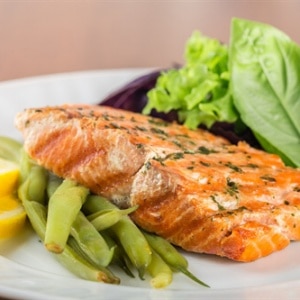
In summary, then, the protein fad, as some might call it, is based on tons of evidence showing that, when combined with RT, is both useful and, for older adults, crucial. That is, in order to mitigate sarcopenia, regardless of whether one engages in RT, higher protein recommendations are valid and critical. But adding in the prescription to engage in RT 2 – 3 times a week, especially for older people, higher protein intakes of 1.2 – 1.6 g/day, divided into 3 or more meals/day, is essential. Not only to keep or build muscles but to live longer and more independently as we age.
References:
Rosenberg, TuftsNow, 2019
van Loon, YouTube: FoundMyFitness, 2024
Trommelen et al., Cell Reports Medicine, Dec. 2023
Morton et al., Frontiers of Physiology, June 2015
Witard et al., Int’l J Sport Nutrition and Exercise Metabolism, Oct. 2021
Trommelen et al., Sports Medicine, Jan. 2019
van Loon, Sports Medicine, Sept. 2016
Good-bye Old Friend
Norris Nielsen, whose wife, Britton, has supplied the gym with wonderful, home-grown bouquets from Spring to Fall, was what one might call a lifer: he was a consistent and hard-training client of Dan DeFigio’s for almost 20 years. Norris passed away after a year-long struggle against colon cancer on August 26, leaving behind his wife, 3 daughters, and five grandkids. But he also left behind a legacy of kindness, generosity, and a commitment to his own health and fitness that served as an example for all.