 July 2026
Where More Complexity Yields More Benefits
You can do simple biceps curls OR you can do a complex lift such as a squat and a curl. Is one better than the other?
A group of researchers tried to answer the question of motor variability (MV) and strength adaptation by employing Fuzzy Entropy, a “mathematical measure used to quantify the ambiguity, vagueness, or “fuzziness” of a system”. They hypothesized that “individuals with greater initial variability would exhibit superior strength adaptations.”
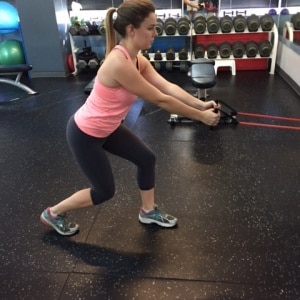
What is MV? MV is based on the variation of accelerations during a set of squats at a certain percentage of one’s ability with the load being relative to what the person can do. High MV (HMV) has less consistent speeds throughout the set whereas low MV (LMV) has more consistent speeds.
Subjects were divided into HMV and LMV as well as stronger (SG) and weaker (WG) groups. All 58 subjects, divided by MV and initial strength, did the same 9-wk lower body strength program and were compared on squat strength.
Both the SG and WG made significant gains. Among the SG, the HMV made substantially greater gains than did the LMV. However, among the WG, no significant differences in strength gains were seen between the HMV and LMV groups.
The conclusion is that stronger people with HMV demonstrate “greater neuromuscular adaptability” from training but MV may not matter much in those with LMV. This may be a function of training experience or athleticism. It’s also possible that more complex lifting may be the way to greater gains.
JSCR May 2026
Menstrual Cycle Hormonal Fluctuations and Strength Training
Strength training (ST) makes muscles stronger and larger (hypertrophy) if you have the right hormonal milieu. Men have fairly consistent and stable levels of testosterone while women have fluctuations of estradiol and progesterone throughout their menstrual cycles (MC). A popular, if unproven, theory of training women differently according to the phase of their cycle – called MC phase-based training (MCPBT) – suggests that ST will yield different results accordingly.
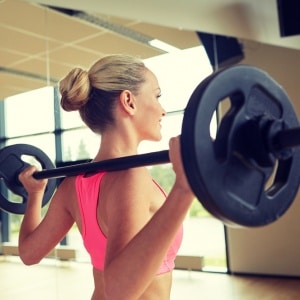
Twenty-four healthy, eumenorrheic females were assigned to one of four conditions: non-exercising controls (C), continuous across all phases ST (CEX), high volume during the follicular and low during the luteal phases (HV-FOL), or the converse (HV-LUT). High volume was 5 sets/leg exercise x 2 sessions/wk while low volume was 1 set/exercise 2/wk. All of the women underwent “rigorous hormonal confirmation” via blood and urine testing, not guessing. Thigh lean mass (TLM), leg fat-free mass (FFM), one-rep max test (1RM), and vastus laterals thickness (VLT). The training program spanned 3 MC.
Much to the chagrin of those who tout MCPBT, “neither hypertrophy nor strength advantages” were different than those achieved from CEX. Basic training volumes and loads were associated with the adaptations subjects experienced.
Ultimately, the authors concluded, ST throughout the MC “could be based on individual preference” and does not need to be adjusted for the MC phase to get stronger, bigger muscles.
MSSE May 2026
Tid Bits
A standard assumption of age-related muscle weakness is that all muscles weaken at similar rates. However 2 studies have shown that that is not the case. In fact, lower body and core stability muscles deteriorate faster than upper body muscles. Hip abductors and adductors lead the pack at 44% strength loss in older adults followed by quadriceps (33-40%), hamstrings (36%), and calf muscles (37%)…most likely due to INACTIVITY! LER Apr. 2026
Body composition is assessed by separating lean body mass (LBM) – muscle, bone, organs, etc. – from fat mass (FM). A standard that uses regression equations to estimate FM is skin fold (SF) pinches. However, these equations are based on comparisons to more accurate measures such as underwater weighing or bioelectric impedance. InBody scales are top-tier devices that compare favorably to more expensive ones like MRI. A study compared InBody to several SF formulae. Findings show that several SF formulae compare favorably but must be “appropriate for different age/sex groups” to be useful to the person and their healthcare team. Brit J Nutrition, June 2026
Cueing during demanding strength exercises is standard fare among trainers. To test the effects of core stabilization cues such as “activate your core” or more detailed muscle bracing coaching, researchers had people do a maximal isometric deadlift, a move that requires the trunk muscles to lock in to protect the spine. “Postural displacement decreased and rotational stiffness increased” in the coached “activate specific muscles” vs the directive “activate the core” conditions. However, decreases in lifting force were evident in both cued conditions compared to baseline – such as basic technical training sans cues – efforts, perhaps due to the added and distractive “cognitive effort and attentional focus imposed by the cues”. Sometimes simple is better. And proper teaching is better than more talking. JSCR, May 2026