 June 2026
Minimalist vs Maximalist Running Shoes
Way back at the beginning of the century, a popular book based on anthropological research into Southwest American indigenous people who ran long distances claimed that non-supportive footwear is good if not better for the feet than what we’ve grown accustomed to: $120-$180 sneakers that cushion and stabilize the foot. Ongoing studies have found that foot and knee injuries to runners have held pretty consistent since these fancy shoes were introduced in the 1970s. Yet thin-soled shoes of the Tarahumara Indians didn’t lead to the rate of injuries modern runners experienced. Why?
Subsequent studies have investigated the whys and wherefores of running styles and how shoes impact foot and knee patterns and injuries. In general, when the foot is minimally supported, the muscles get stronger and do their jobs and stabilize the many joints of the foot. The minimalist shoe now had its motives and its methods. We, of course, have covered these issues since almost Day 1 here, here, here and here.
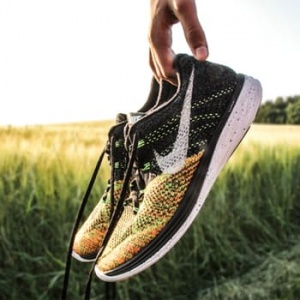
Yet, over the years, people kept getting hurt, even with these shoes and the recommended shorter-stride length gait patterns they encourage. Hence the maximalist shoe, one that offers nearly an inch of lightweight cushioning. But do these reduce injuries, some researchers wanted to know.
They compared “plantar pressure [PP], peak forefoot [PFP] and rearfoot [PRP] pressure, center of pressure displacement [CoPdisp] and distance [CoPdist] between maximal and traditional running shoes” in recreational runners.
They found that PFP was “significantly lower in the maximal shoe” while CoPdisp and CoPdist were also “significantly shorter in the maximal shoe.“
In sum, the “findings suggest that maximal shoes may help with load management for injuries where decreased forefoot plantar pressure is desired.” Oy…
J Sci Med Sport, Nov. 2025
Groin Muscle Training: Overlooked Yet Critical
The hip adductors/groin muscles are often under-appreciated…until you injure them. There are 4 of them and a couple of them impact more than just the hip; they affect the knee, too. However, most injuries to these muscles occur when the leg suddenly goes off to the side, such as when cutting in tennis, football, soccer…and pickleball. Got your attention yet? These muscles, originating on the pelvic bone, control the leg from deviating too far away from the midline but, when the foot is on the ground, they help stabilize the pelvis itself.
So, while many athletes and fitness aficionados attend to the quadriceps on the front of the thigh, and the gluteals on the rear (literally) and side of the hip, and the hamstrings on the back of the thigh, they often forget to work the adductors, much to their chagrin when they get hurt.
So a team of researchers assessed 8 common hip adductor exercises to see which ones were best for training such relevant but rarely studied variables such as fiber lengths, fiber velocities, and activations.
Traditional deadlifts and sumo deadlifts (with feet turned outward) were top-notch exercises for the adductor magnus and gracilis. The lateral slide, on a slide board or with glider disks, was deemed a Tier 2 exercise for all the adductors. The side-lying bottom-leg leg raise stimulated the adductors brevis and longus but not the magnus and gracilis. Squats were effective for the gracilis and adductors magnus and longus. Step ups were good for the gracilis but so-so on the 3 adductors.
The hands down winner was the straight-leg Copenhagen exercise; it got them all. And it is a real challenge. Lying on your side with the top leg on the edge of a chair, propping the upper body on the elbow and forearm of the bottom side, you raise the entire body up and down.
Do these for a few weeks and now go play pickleball.
MSSE Apr. 2026
Tid Bits
Do changes in cardiorespiratory fitness (CRF) over a 1-3 year period impact one’s risk for cognitive decline? By testing 770 healthy adults (avg. age 72) on cognitive function and aerobic fitness for up to 10 years, researchers found that the change in CRF 1 and 3 years out did not affect cognition. However, a higher baseline level of fitness as one enters one’s 8th decade “was linked to better cognition 5 years later”. Thus, “achieving and maintaining” higher levels of CRF throughout your life might sustain cognitive function, too. MSSE Apr. 2026
Weightlifting injuries have been studied in athletic populations but rarely in the general public. A review of the National Electronic Injury Surveillance System of lower body injuries due to weightlifting between 2014 and 2023 recorded 6846 injuries to the lower body. The mean age was ~32 with 70% being male. Contusions (21%), fractures (19.5%), and nerve injuries (5.1%) were the most common. Young (<18) patients were apt to injure a toe or foot. The causes were what any parent would expect: dropped weights, meaning kids need better education and supervision. Ortho J Sports Nov. 2025
A study from Poland assessed the value of myofascial release (MFR), which is used in the treatment of many soft tissue issues, on the “range of motion (ROM) and functional efficiency” of the flat foot in adults. Four groups of subjects were assessed on 2 validated measures of the dependent variables: MFR+specific for Exercises (MFRE), MFR alone (MFR), exercises alone (E), and a non-intervention control (C). Both the MFRE and MR groups improved ROM while MFRE and E both improved functional efficiency of the foot. Thus, they concluded that MFRE is a more potent therapeutic protocol for flat feet in older adults. MFR could be done with a tennis or golf ball and the short-foot (or foot doming) exercise, once learned, can be done without any equipment, at home! Healthcare (Basel) Aug. 2025